
Defensive Publishing and Digital Archive
A defensive publication deliberately turns an invention into prior art that may stand against later third-party patent applications. Proofbox automates this: a qualified eSeal with a timestamp under eIDAS, a DOI, and permanent, logged findability. The full text remains access-controlled.
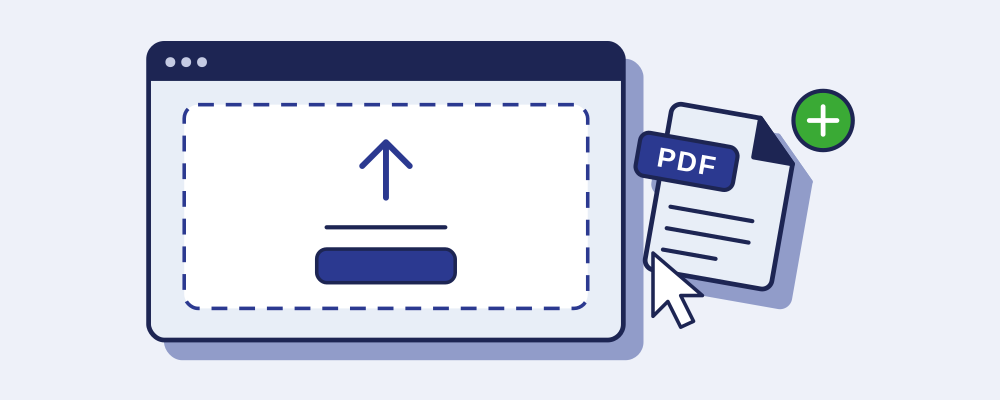
Defensive Publishing
With Proofbox, you can publish technical innovations discreetly, securely and cost-effectively, without filing a patent application. The IP-related Software-as-a-Service on our platform enables defensive publication (also referred to internationally as defensive publication, defensive disclosure, research disclosure or technical disclosure), an established strategy for counteracting a later patent application on the same invention by a third party. Each disclosure is digitally time-stamped and stored in our tamper-evident online archive, which supports the verifiability of the disclosure and of its publication date. This service suits companies, start-ups and individual inventors who want to preserve freedom to operate for their invention without seeking full patent protection.
Cost-Efficient Support of Your Freedom-To-Operate
A discreet disclosure via Proofbox establishes documented prior art. This supports your freedom to operate and reduces the risk of third parties later obtaining rights to the same idea — without exposing it to automated competitor monitoring.
Immediate Establishment of Prior Art
Publishing immediately via our IP-related software solution establishes prior art. It may stand against the novelty of later applications by third parties covering the same subject matter, and thereby counteract the acquisition of exclusive rights to the same idea.
Globally Findable Internet Disclosure
Proofbox prepares your internet disclosure so that it is findable worldwide. At the same time, the controlled archiving system and its paywall contain unwanted or uncontrolled dissemination of your idea. This combination of findability and discretion is what characterises the platform.
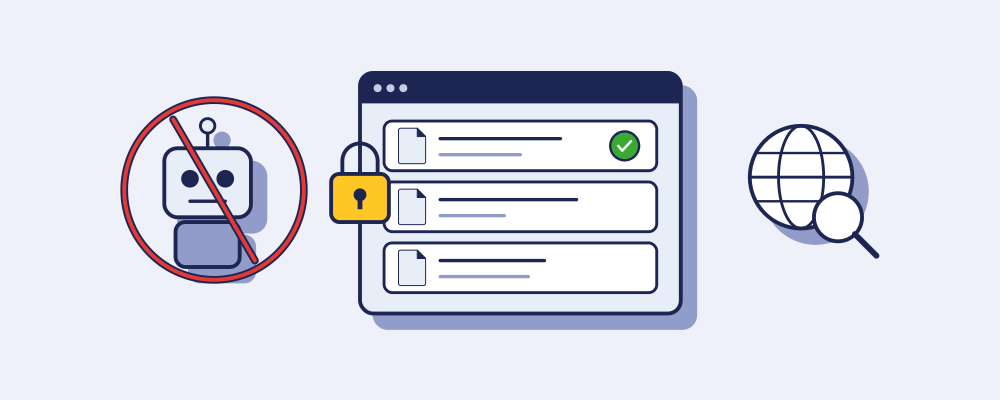
Online-Only Archiving
Our platform provides a purely digital archive for technical disclosures, operated independently of external databases or public libraries. Proofbox relies exclusively on internet publication: the disclosure appears digitally in the Proofbox archive and not in a printed journal. Each disclosure is accessible exclusively through our archive, with its findability logged daily and auditable via a hash chain. This supports long-term online availability as well as verifiable traceability and the detectability of subsequent changes. Proofbox is aimed at innovators who want to retain extensive control over their publications without depending on third-party institutions.
Paywall-Protected, Yet Publicly Accessible
Our archive is publicly accessible, yet protected by a paywall. Each disclosure remains indexable, so it stays findable without allowing unrestricted access. This strikes a balance between the necessary visibility and a discreet disclosure that cannot be monitored. Under EPO practice, an access fee does not preclude public availability.
Verifiability and Long-Term Availability
All publications are stored securely and their availability is documented in a verifiable manner. Each document is archived in a tamper-evident way and prepared according to the criteria applied to an internet disclosure as prior art.
Aligned with International Disclosure Standards
Proofbox is aligned with the disclosure criteria that WIPO (PCT), the EPO (EPC) and the USPTO (35 U.S.C.) apply to an internet publication as prior art. Each publication is prepared accordingly and can therefore be cited in proceedings. Whether it is taken into account as prior art in a given case is decided by the competent authority or court.
Designed for long-term validity
The chain of evidence is designed for long-term validity. Timestamp and seal under eIDAS (EU) 910/2014 are issued with long-term validation, so that verifiability is retained even when the underlying certificates expire. The SHA-256 hash is embedded in the seal, and each publication receives a persistent DOI via Crossref (ISO 26324). Availability is documented for seven years from publication, with notice before expiry and an option to extend.
Every publication carries its DOI in the archiveFrequently asked questions about defensive publication
What is a defensive publication?
A defensive publication is the deliberate disclosure of an invention with the aim of making it prior art. It creates no industrial property right. It documents that the invention was publicly accessible at a specific point in time and may therefore stand against the novelty of later third-party patent applications for the same subject matter. This supports freedom to operate without requiring a patent application of your own.
How does a defensive publication work on Proofbox?
You upload a PDF, and the platform processes it fully automatically. The document receives a qualified eSeal with a qualified timestamp under eIDAS (EU) 910/2014 with long-term validation, a SHA-256 hash is embedded in the seal, a persistent DOI is registered, and the publication appears in the Proofbox archive under a permanent URL. Title, author, and abstract are publicly findable, and availability is monitored and logged. Archiving runs for seven years, with notice before expiry and an option to extend.
What does a defensive publication cost compared with a patent application?
A defensive publication on Proofbox is handled with a one-time publication fee; there are no maintenance fees. You will find the current fee on the prices page. A patent application, by contrast, incurs official fees for filing, search, and examination as well as annually increasing renewal fees over its entire term, plus the usual costs of professional representation. The two instruments do different things, however: a patent grants an exclusive right, while a defensive publication documents prior art.
When can an internet publication be taken into account as prior art?
An internet disclosure can be taken into account as prior art if it meets certain requirements. These include at least permanent findability through search engines, a tamper-proof timestamp with long-term validation (LTV), and documented evidence that the publication has been continuously publicly accessible since its publication date. Proofbox is designed to systematically fulfil and document exactly these criteria.
Can I simply publish my invention on my own website?
In principle yes, but in practice this is risky. For the publication to work as a disclosure, permanent findability, tamper-proof dating, and a verifiable record of public availability must be in place. Without reliable evidence of these points, the publication may be disregarded in a dispute and then has no effect against third-party patent applications.
Can I still file a patent after a defensive publication?
In most jurisdictions, your own publication counts as prior art against your own later patent application for the same subject matter. A defensive publication is therefore a strategic decision: it trades your own patenting option for documented prior art. If you are unsure about the commercial potential, make this assessment before publishing.
Does the content of my invention remain confidential?
Title, author, and abstract are publicly findable; this is a precondition for the publication being capable of recognition as prior art. The full text remains access-controlled and is only available for a fee; this reduces automated scraping and undesired dissemination of the details. A defensive publication remains a disclosure, however: the access restriction is dissemination control, not secrecy.
A defensive publication creates no industrial property right. Whether it is taken into account as prior art in a given case is decided by the competent authority or court in free evaluation of evidence. Proofbox provides the technical and organisational preparation, not the legal assessment, and is not authorised to give legal advice.